How AI Agents Are Transforming Work in 2026
What Are AI Agents and How Do They Work?
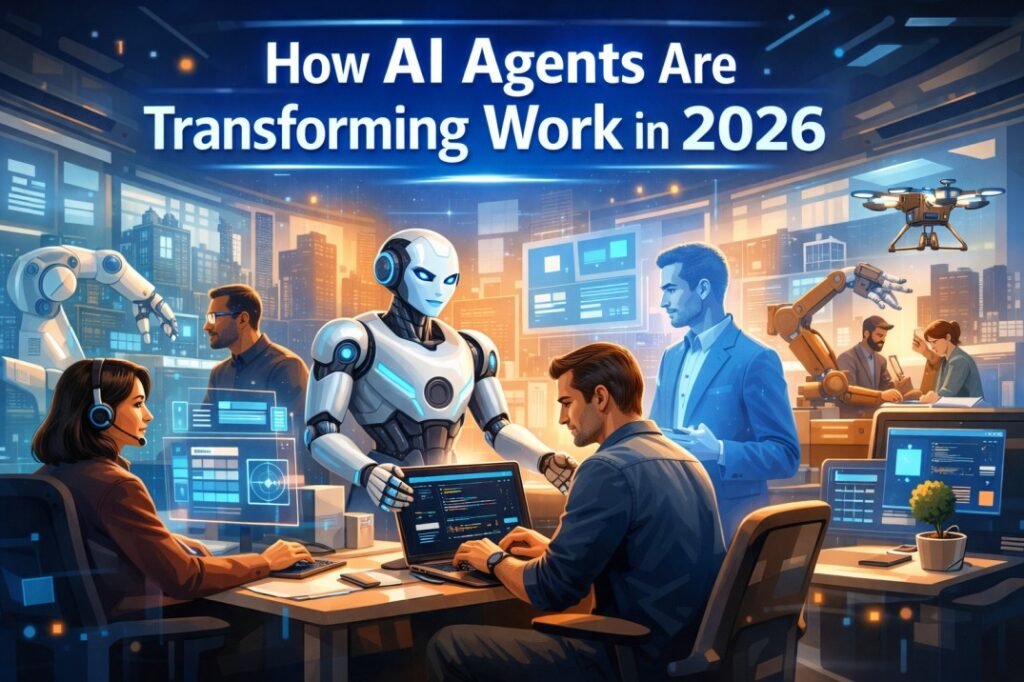
AI agents are advanced artificial intelligence systems designed to perform tasks independently with minimal human input. Unlike traditional chatbots that only respond to prompts, AI agents can make decisions, plan actions, and complete multi-step tasks on their own.
They work by combining machine learning, natural language processing, and automation tools. This allows them to understand goals, break them into smaller steps, and execute them efficiently. For example, an AI agent can not only write an email but also research information, draft content, schedule sending, and even follow up automatically.
In simple terms, AI agents act like digital workers that can think, decide, and act within defined boundaries.
Evolution of AI Assistants into AI Agents
A few years ago, AI tools were mostly simple assistants. They could answer questions or generate text, but required constant human direction. Now in 2026, AI has evolved into fully autonomous agents.
The key difference is independence. Earlier systems waited for instructions at every step. Modern AI agents can understand a complete objective and manage the workflow themselves.
For example:
- Old AI assistant: “Write a blog about marketing.”
- AI agent: “Create a marketing blog, research trends, write SEO content, add keywords, and suggest publishing time.”
This shift has made AI a powerful productivity engine instead of just a helper tool.
Why 2026 Is a Turning Point for AI Automation
The year 2026 is considered a major milestone because AI adoption has reached a practical and business-ready stage. Several factors contribute to this shift:
- Improved AI accuracy and reasoning
- Lower cost of AI tools
- Integration with business software (CRM, ERP, cloud systems)
- Wider acceptance in workplaces
Businesses are no longer experimenting with AI; they are relying on it for daily operations. From startups to large enterprises, AI agents are now part of core workflows.
Key Industries Already Using AI Agents
AI agents are not limited to tech companies. They are now used across multiple industries:
- Marketing and Advertising
AI agents manage campaigns, generate content, analyze audience behavior, and optimize ads in real time. - Customer Support
They handle tickets, respond to queries, and solve common problems without human agents. - Software Development
Developers use AI agents to write code, debug errors, and test applications faster. - Finance and Accounting
AI systems analyze transactions, detect fraud, and generate financial reports.
These applications show how deeply AI is becoming integrated into professional environments.
AI Agents in Customer Support Automation
One of the biggest transformations is happening in customer support. Businesses now use AI agents to provide instant responses 24/7.
Instead of waiting in long queues, customers receive immediate solutions. AI agents can:
- Answer FAQs
- Track orders
- Resolve basic complaints
- Escalate complex issues to human staff
This improves customer satisfaction while reducing operational costs for businesses.
AI Agents for Content Creation and Marketing
Content creation has become significantly faster with AI agents. They can generate blog posts, social media captions, product descriptions, and email campaigns in minutes.
In marketing, AI agents analyze audience behavior and suggest the best content strategies. They can even test different versions of ads and automatically choose the best-performing one.
This allows businesses to scale their marketing efforts without increasing workload.
AI Agents in Software Development
Developers are now using AI agents as coding partners. These tools can:
- Write code snippets
- Fix bugs
- Suggest improvements
- Run tests automatically
This speeds up development cycles and reduces manual effort. Even non-programmers can now build basic applications using AI-assisted tools.
AI Agents in Business Decision-Making
AI agents are also helping leaders make smarter decisions. They analyze large datasets and generate insights in real time.
For example:
- Predicting sales trends
- Identifying customer behavior patterns
- Suggesting cost-saving strategies
This data-driven approach reduces guesswork and improves accuracy in business planning.
Benefits of AI Agents for Productivity and Cost Reduction
AI agents offer several advantages:
- Faster task completion
- Reduced human workload
- Lower operational costs
- 24/7 availability
- Improved accuracy in repetitive tasks
Businesses can now scale faster without significantly increasing staff size.
Risks and Challenges of AI Agents
Despite the benefits, AI agents also come with challenges:
- Job displacement in repetitive roles
- Over-dependence on automation
- Data privacy concerns
- Risk of biased decision-making
Companies must balance automation with human oversight to avoid these issues.
Future Trends of AI Agents Beyond 2026
The future of AI agents is moving toward fully autonomous systems. We can expect:
- Multi-agent collaboration (AI systems working together)
- Fully automated businesses
- Smarter personal AI assistants
- Real-time decision-making systems
AI will not just support work, it will actively run parts of it.
How Professionals Can Adapt to the AI Agent Era
To stay relevant in this evolving landscape, professionals should:
- Learn how to use AI tools effectively
- Focus on creative and strategic skills
- Develop problem-solving abilities
- Combine human judgment with AI efficiency
Those who adapt early will have a strong advantage in the future job market.