The Future of Cosmetic Packaging: Trends Every Brand Should Know
The Future of Cosmetic Packaging: Trends Every Brand Should Know
My friend Amina runs a tiny skincare line out of her apartment, mostly serums, a couple face oils. Talked to her on the phone last week and she mentioned something that stuck with me. Her packaging supplier now asks about “end of life” before quoting a price on anything. Not shelf life, not how long the box holds up in storage. End of life meaning what happens to the thing after the customer’s actually done using the product. Five years ago that question wasn’t even part of the conversation. Now apparently it’s question number one.
That’s kind of the whole story of where this industry’s headed, honestly. Not one big dramatic shift, more like five smaller ones happening at the same time, and if a brand isn’t paying attention to at least some of them, it starts looking dated pretty fast, even if nothing about the actual product changed.
Refillable Packaging Stopped Being a Nice Gesture
A couple years ago refillable containers were mostly a premium brand thing, a way to look forward-thinking without really committing to it. That’s shifting now, especially in skincare and fragrance. Buy the outer container once, then just replace the pod or insert when it runs dry. Obviously that cuts down on waste, but brands also like it for a less obvious reason once someone owns your container, they’re stuck buying refills from you specifically instead of wandering off to a competitor.
Building this properly isn’t simple though. A refill mechanism has to hold up through repeated opening and closing without the hinge or the seal wearing out, which is honestly a different engineering headache than a box that only gets opened the one time.
Minimalism, Just More Deliberate About It
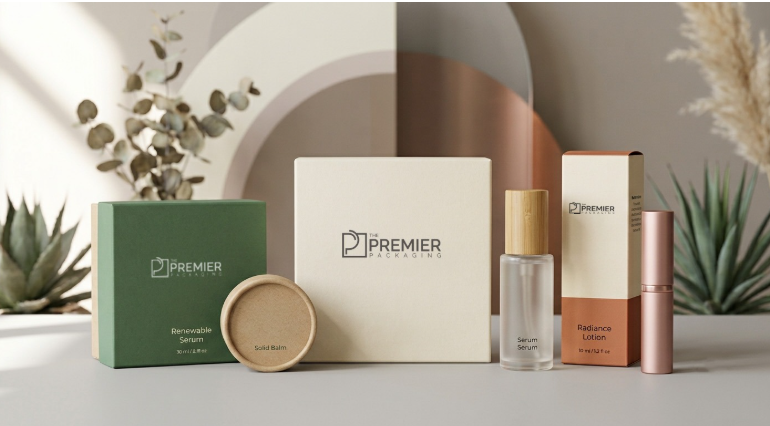
Stripped-back packaging isn’t some new discovery, brands have leaned into “less is more” for years now. What’s actually changing is how intentional it’s gotten. It’s less about doing less overall and more about picking one detail — a specific fold, a single embossed line, one accent color — and letting everything else sit quiet around it. Weirdly, custom cosmetic boxes built this way often cost more to make, not less, because nailing one tiny detail perfectly takes way more precision than throwing five design elements at a box and seeing what sticks.
There’s a practical side to this too, not just aesthetic. Fewer material layers generally means easier recycling, so the minimalist look and the sustainability push have basically merged into the same trend at this point.
Smart Packaging Is Sneaking In Everywhere
QR codes on cosmetic boxes used to feel like a box someone checked off a marketing to-do list. Now they’re doing real work. Scan the code on a serum and you get a proper tutorial, sourcing info on the ingredients, maybe a shade-matching tool if it’s foundation. Some brands are going further with NFC chips built right into the packaging, so a customer can just tap their phone against the box and pull up authenticity verification, which matters a lot given how much counterfeit product floats around this industry.
This is honestly where custom cosmetic boxes pull ahead of generic stock packaging by a mile. You can’t just bolt on a functional QR code placement or an NFC chip to some mass-produced box that was never built with any of that in mind from the start.
Materials Beyond the Obvious Recycled Paper Option
Recycled kraft board became the go-to sustainable choice a while back and it’s still everywhere, fair enough. But brands are starting to look past it now. Mushroom-based materials, sugarcane fiber, seaweed-derived films — stuff that used to sit in lab experiments is slowly making its way into actual commercial packaging runs. Not mainstream yet for most mid-sized brands, mostly because it’s still pricier than standard recycled stock, but the direction’s pretty clear at this point.
Water-soluble packaging is another one worth keeping an eye on. A handful of brands are testing outer wraps or little sachets that dissolve entirely, mostly aimed at travel-size and sample products, where honestly the packaging often outlasts whatever tiny bit of product was actually inside it.
Personalization Got Way Cheaper to Pull Off
Printing someone’s name or a custom message on packaging used to demand huge minimum order quantities, so it stayed locked away from anyone except big-batch production. Digital printing has closed that gap considerably. A smaller brand can now offer limited personalization — a name on a box, a seasonal design run, a small batch tied to some collaboration — without the production costs that used to make this basically impossible below a certain order size.
This connects back to custom cosmetic boxes becoming less of a container and more part of the actual purchase itself. People post pictures of packaging with their name printed on it way more than they’d ever post a plain generic box, and brands figured that out pretty quickly.
What Any of This Actually Means for a Brand Right Now
If you’re running a cosmetics line trying to decide where to put money, a few things matter more than trying to chase every trend at once. Start with actually being honest about materials — whatever sustainability claim ends up printed on a box needs to hold up, because people check now, sometimes very publicly. Figure out if a refill system even makes sense for your specific product before assuming it doesn’t. And skip adding smart packaging features just because a competitor did it first — a QR code pointing to something genuinely useful beats one pointing to a generic homepage every single time.
Conclusion
None of these trends are really competing with each other. A brand can go minimalist, refillable, and smart-packaging all at once, and a fair number of the stronger cosmetic brands out there right now are doing exactly that combination. What’s shifting fastest isn’t one single material or feature — it’s the growing expectation that packaging has to do more than just hold a product. It’s become part of how customers judge whether a brand actually means what it says on the label, and that particular shift doesn’t look like it’s slowing down anytime soon.